Jeremy Osborne

Home/Software/This website

This website

Personal project · JavaScript, Canvas, Cloudflare Workers · 2026

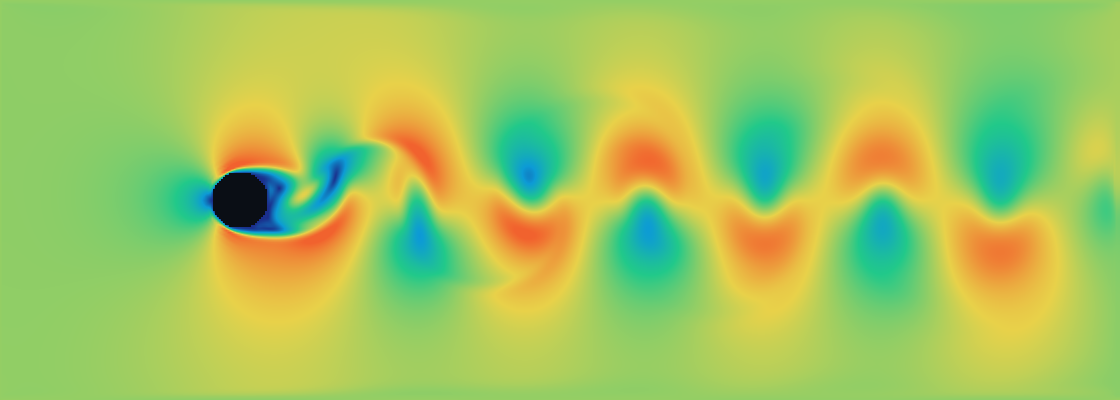
Velocity magnitude contour of a Kármán vortex street shedding off a cylinder
A Kármán vortex street behind a cylinder at Re 331, rendered by the solver on the front page.

This site is my digital portfolio, built to back my CV for graduate mechanical roles. I built it from scratch instead of on a template for one reason: freedom. The front page runs a live 2D LES fluid simulation, so the first thing a visitor sees is a working piece of engineering.

What went into it

Design
Reviewed other portfolios, tried four concept layouts, kept it simple, then rebuilt it as version two
Content
Each project written up from its report, and about 300 images sorted and captioned
Simulation
2D LES in the browser, with drag and lift, vorticity, velocity and pressure views, and live settings
Build
HTML, CSS and JavaScript on Cloudflare, put together by a Python build script, with a contact form that emails me
Testing
Solver tests, checks at desktop and phone sizes, and a review step before every deploy
Tools
Claude Code, Python, Playwright and Git
An early concept for the home page: the name on a dark blueprint grid beside a dimensioned blade drawing
One of four early concepts: a blueprint sheet with a dimensioned blade.
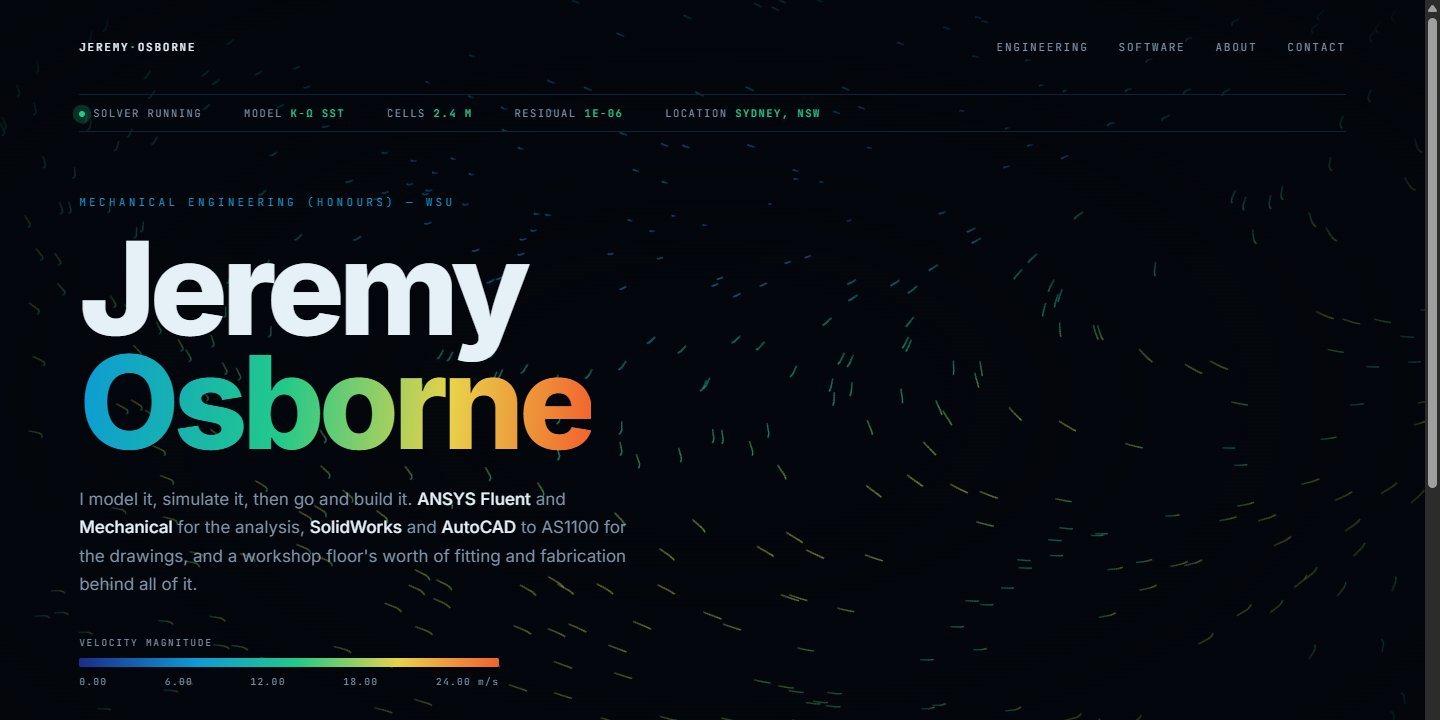
An early concept with a flow field behind the name and a velocity legend
The concept that won: a live flow behind the name.
The first version's home page with pathlines flowing past an aerofoil and live drag and lift readouts
The first version's front page, velocity view.
The home page in pressure view: orange high pressure at the aerofoil's nose over a dark free stream
Pressure view, with the free stream left dark so the body's effect stands out.
The simulation's settings panel open, with inlet velocity and turbulence sliders
Settings: inlet speed and turbulence, changed live.
A project page on a phone in the first version: hero photo, title, plaque and opening paragraph
A project page on a phone, in the first version.

Starting again

The first version had good information in it, but something about how it was presented was off. It wasn't clean enough, and going back to the drawing board was easier than trying to adjust what was there. So I rebuilt it. Version two is light where the first was dark, every picture is laid out on the page where it used to sit in a carousel, all eight projects are on the front page, and the wind tunnel has a window and a console of its own. The writing carried over almost untouched.

Version two's home page: the name across the top and a dark wind tunnel window with a cylinder shedding vortices, its readouts and buttons underneath
Version two's front page, with the tunnel in its own window.
The same home page with the lights off: a navy page with the tunnel window blending into it
The same page with the lights off.
A project page in version two: the section heading on the left and rows of captioned workshop photos on the right
A project page: the section heading stays beside its pictures.
The thesis page's spacing figure: a slider, two rotors drawn to scale and a power curve with the chosen point marked
The spacing figure on the thesis page, drawn from the thesis tables.
Version two's home page on a phone, with the name, the opening sentence and the tunnel
The front page on a phone.

What I took from it

A portfolio is for the reader, so most of the work was cutting: pages got shorter, and seventeen project cards became eight. I also learned to check before I trust. The simulation's numbers only went on the page once they'd been checked against textbook values, and every change was tested at desktop and phone sizes before it went live.