Home/Mechanical/Reinventing the BBQ for a circular future
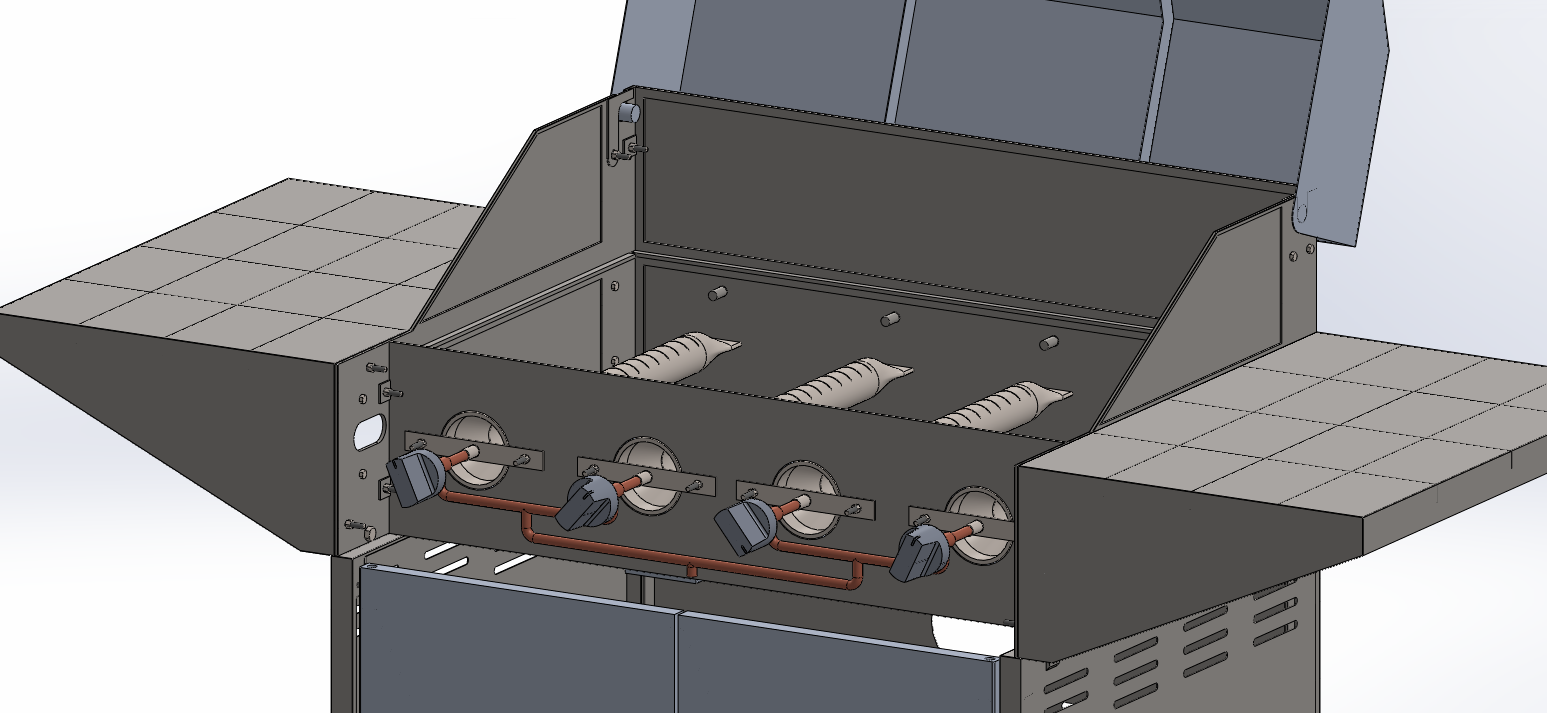
Reinventing the BBQ for a circular future
ENGR2022, solo · SolidWorks · 2025
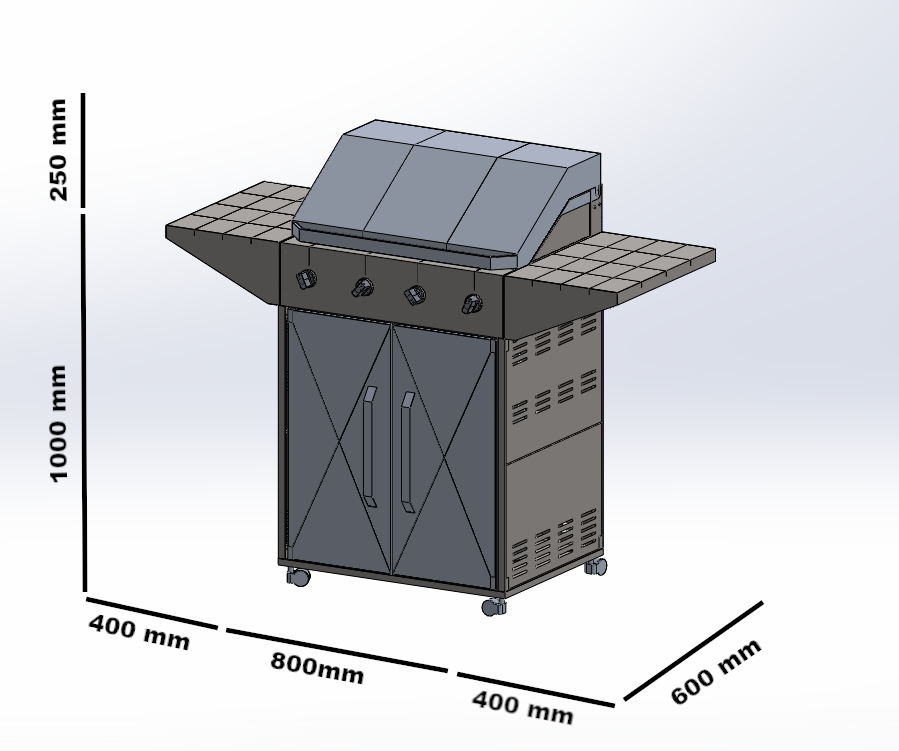
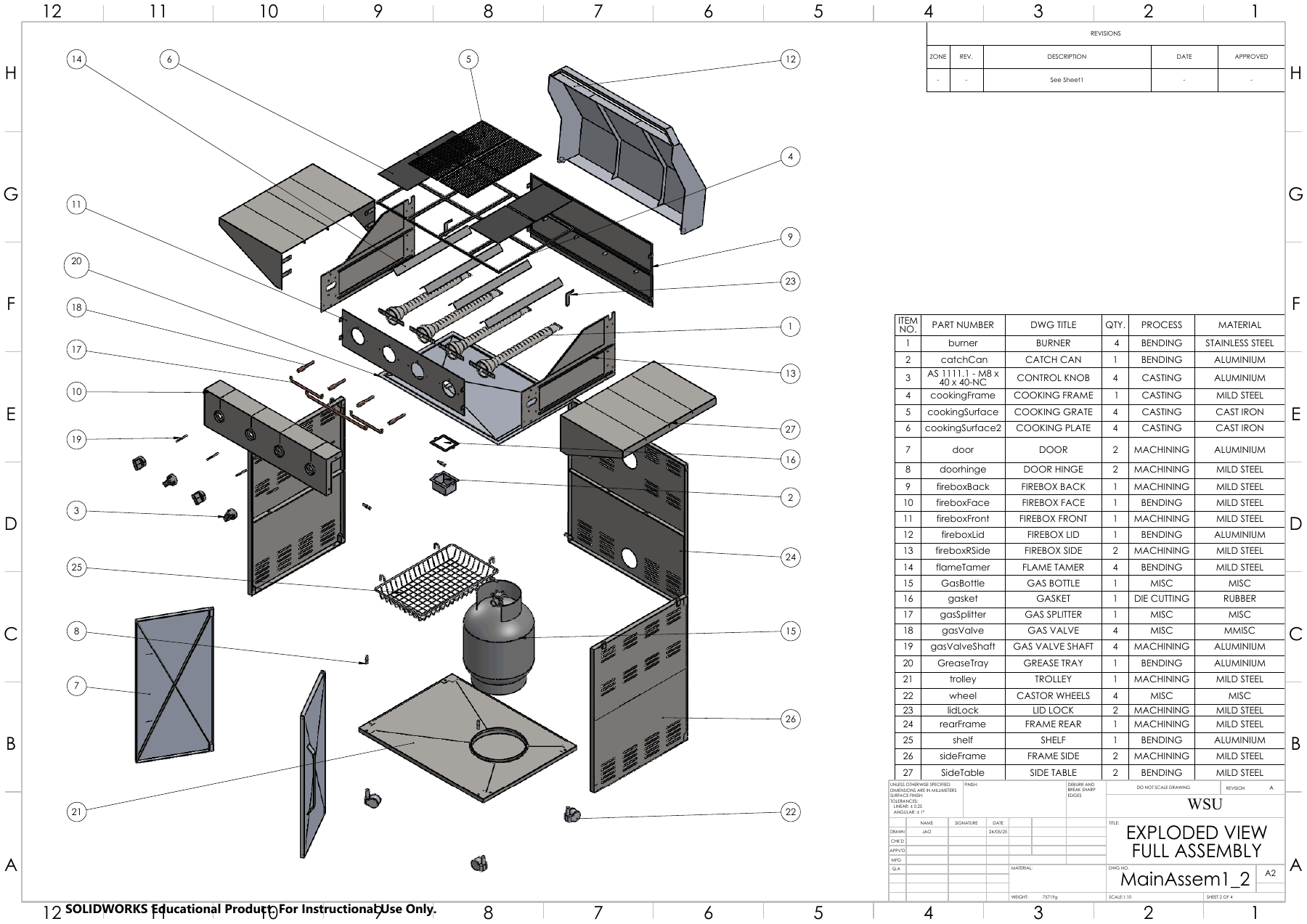
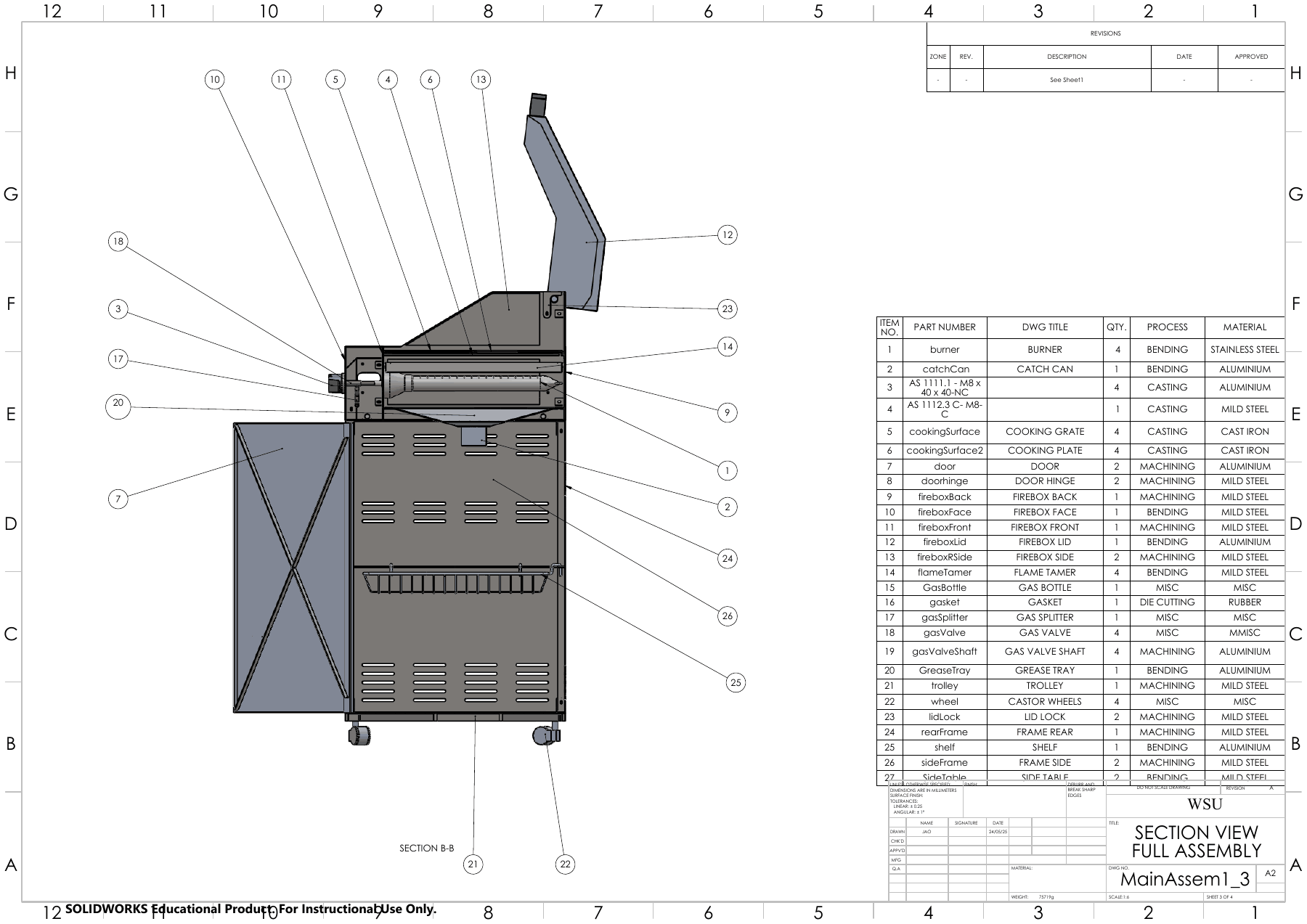
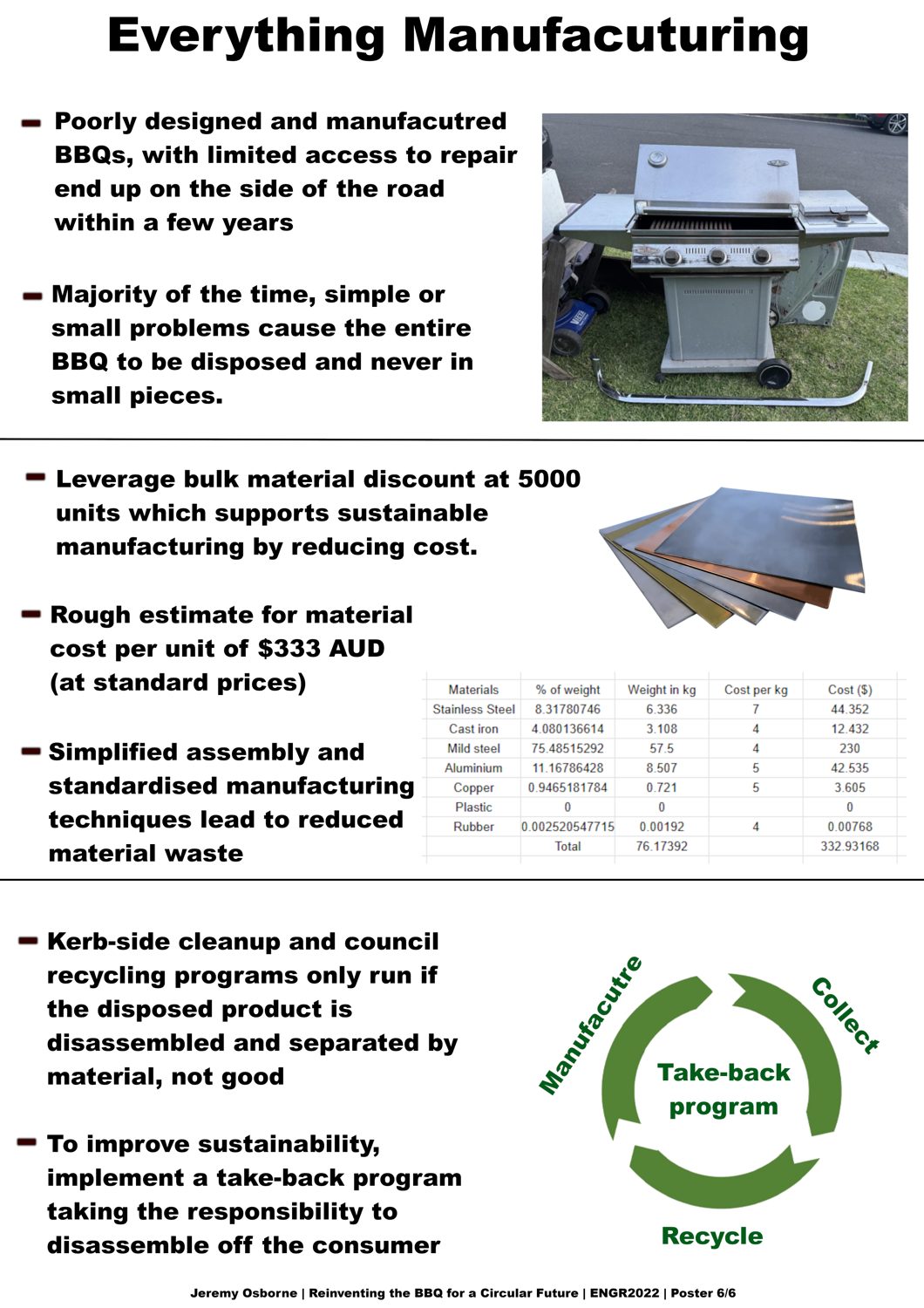
Cheap BBQs end up on the kerb within a few years, usually because of one small fault, and never in pieces a recycler can use. This is a four-burner gas BBQ designed to be repaired and taken apart instead, benchmarked against three Bunnings models, modelled in SolidWorks and drawn up in 39 A2 sheets.
The cooking surface
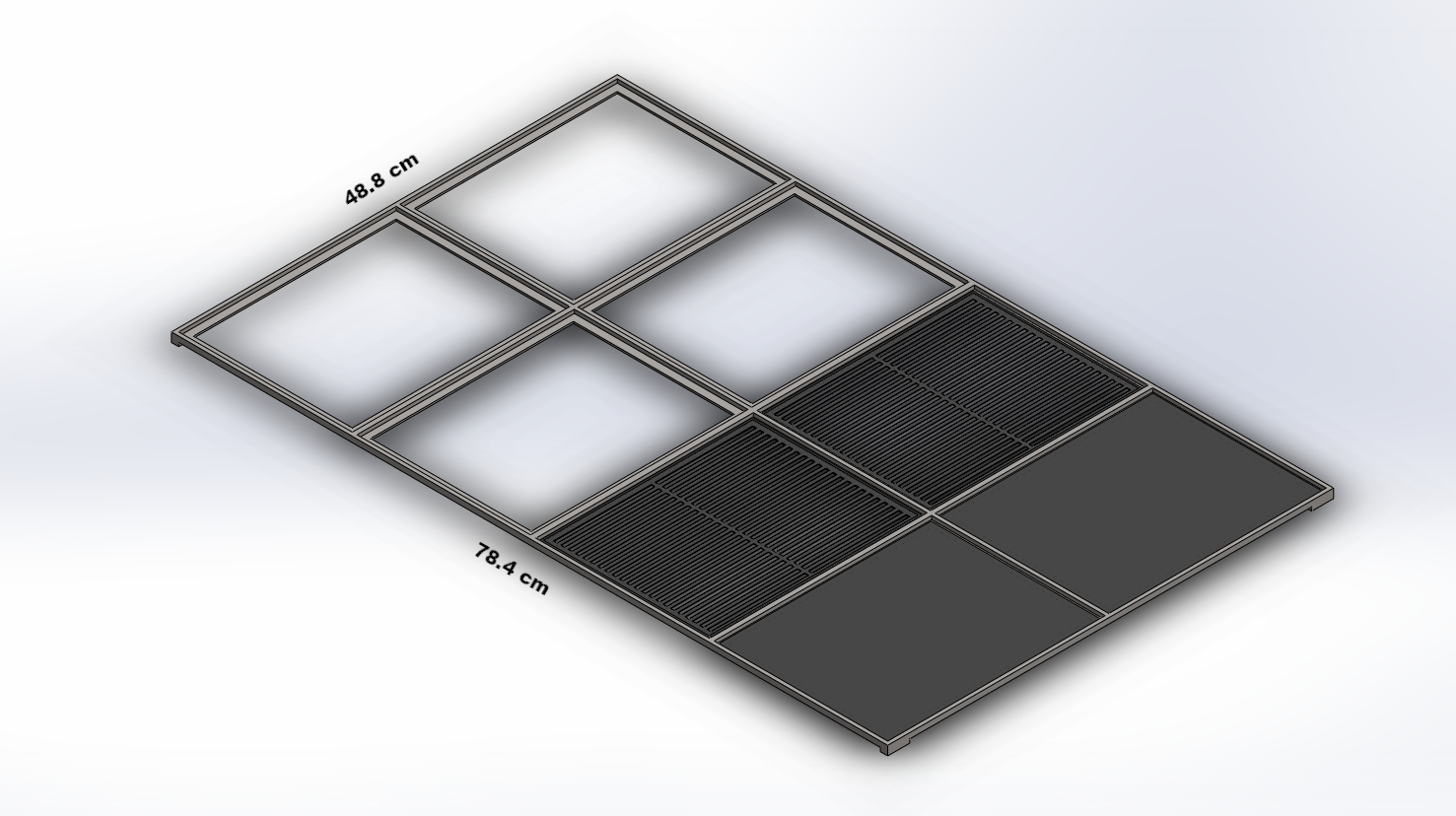
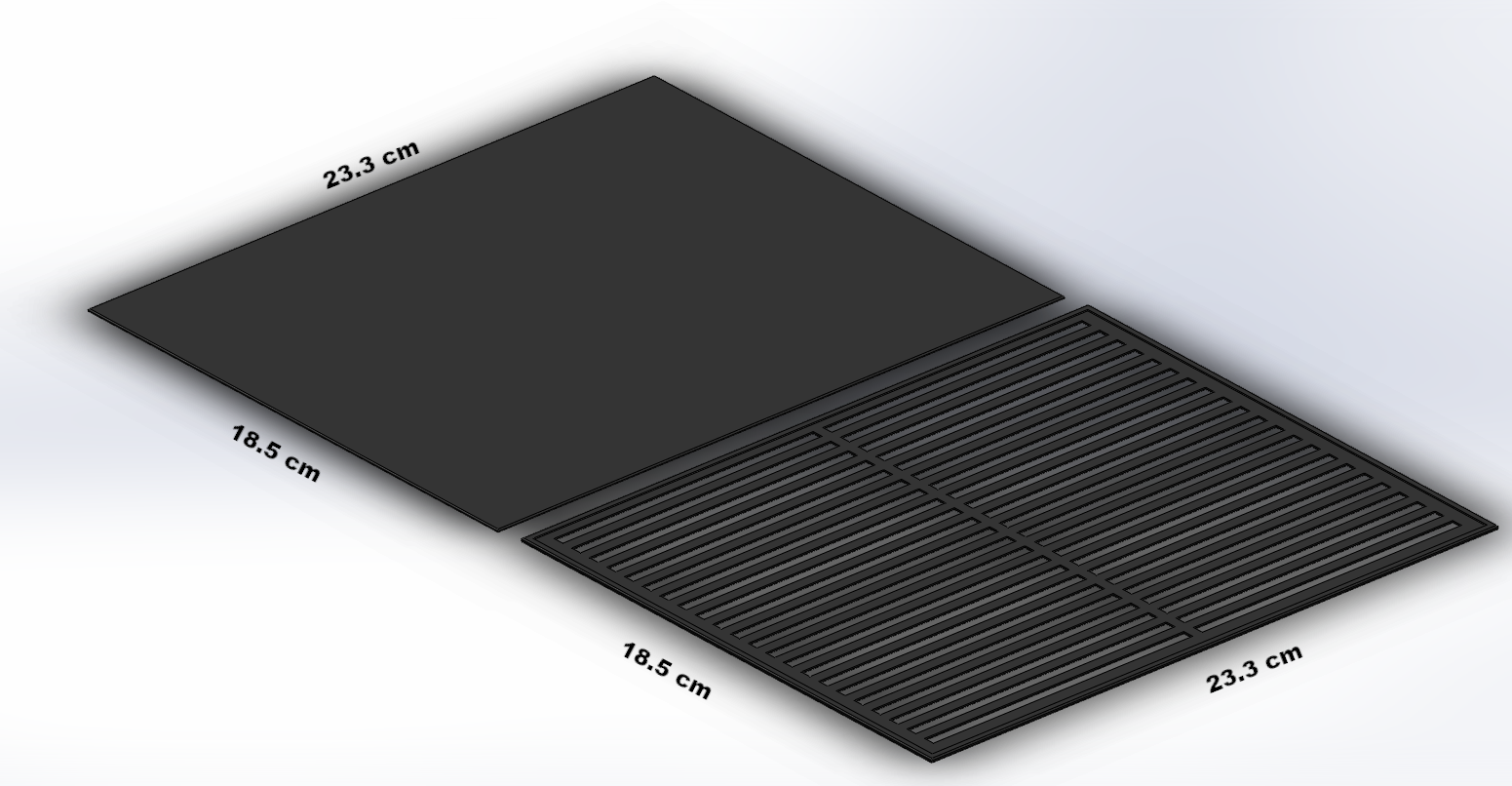
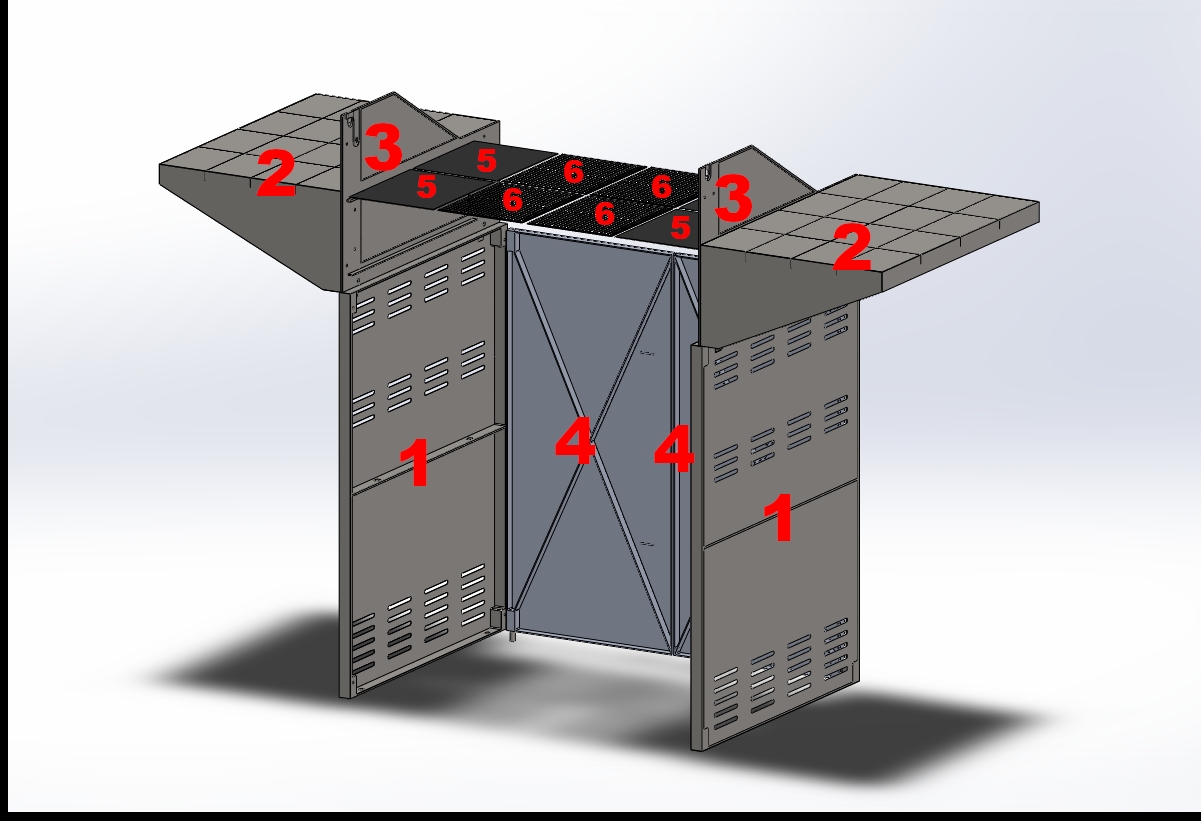
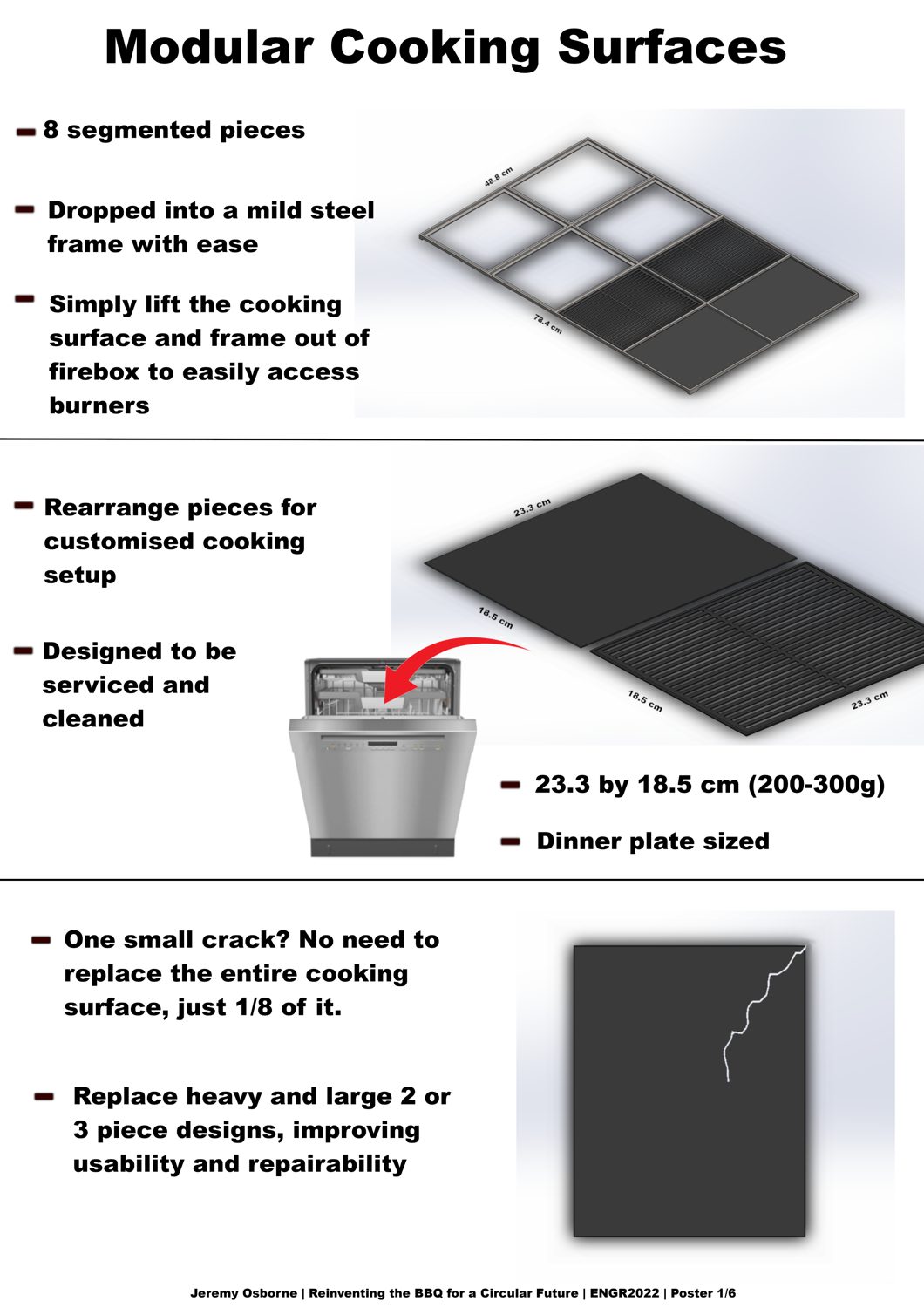
Instead of two or three heavy cast plates, the cooking surface is eight small pieces, four grates and four plates, and they all fit in a dishwasher.

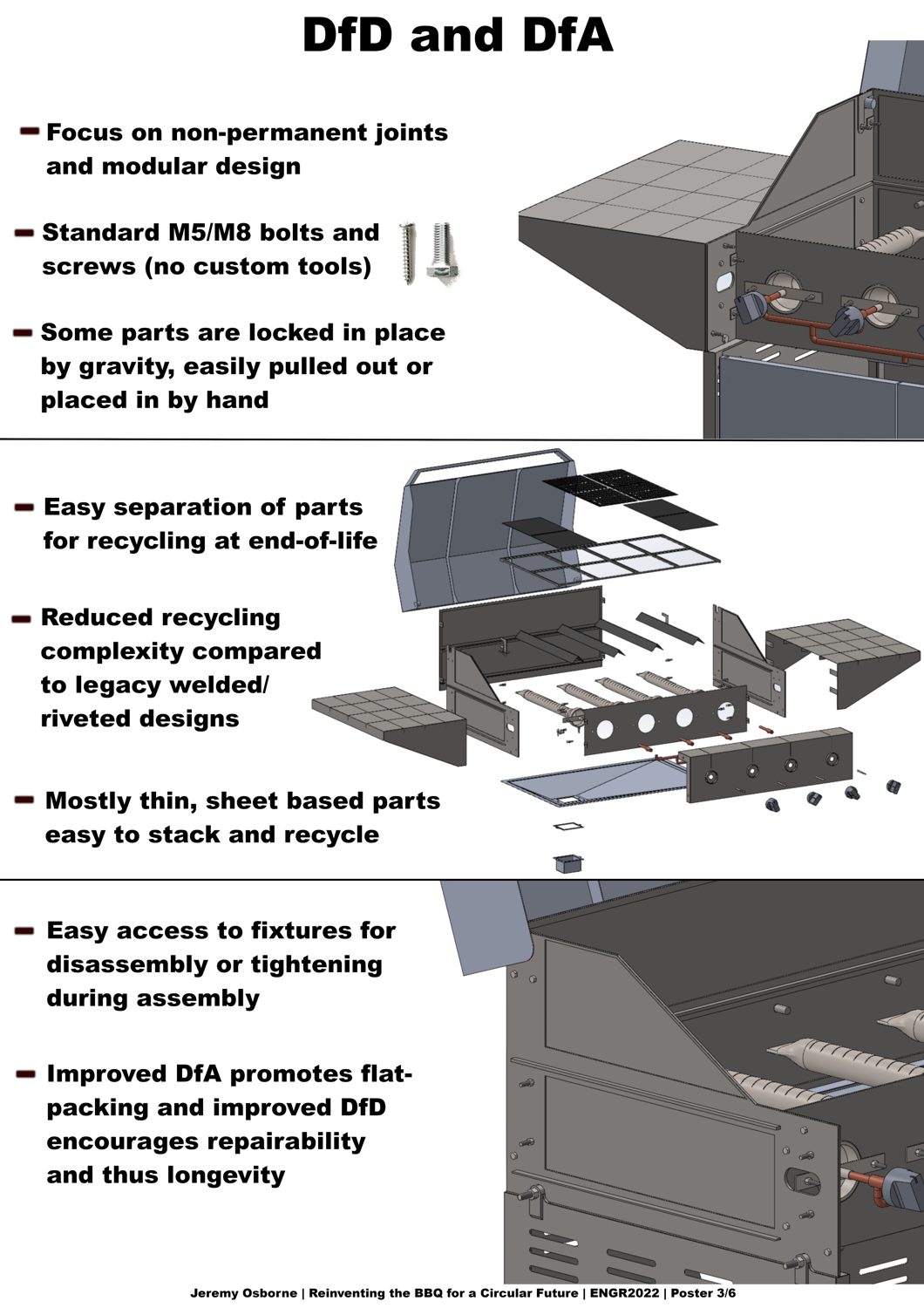
Built to come apart
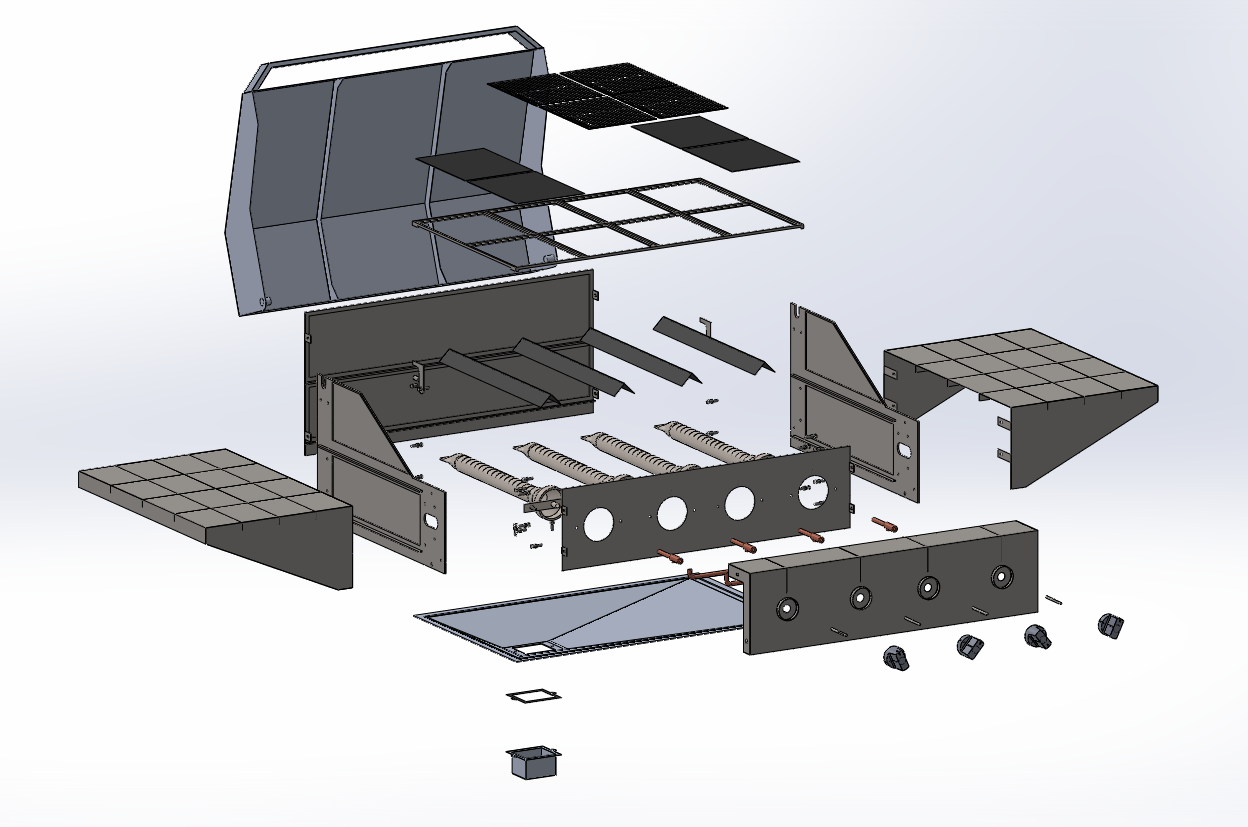
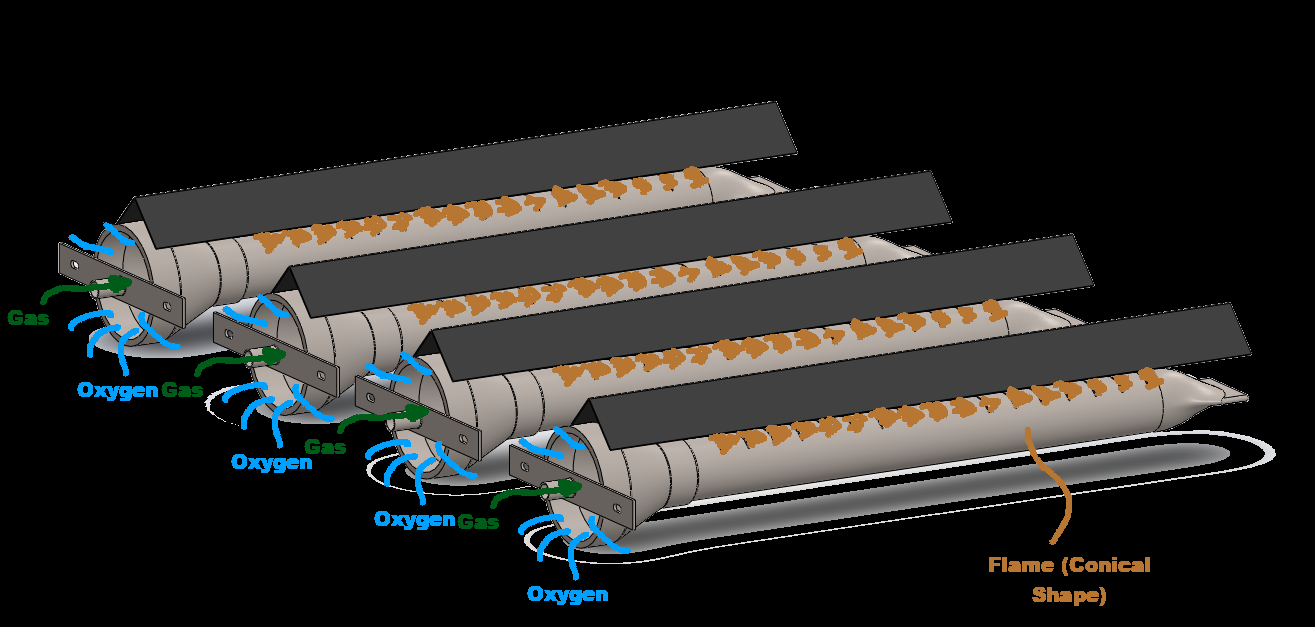
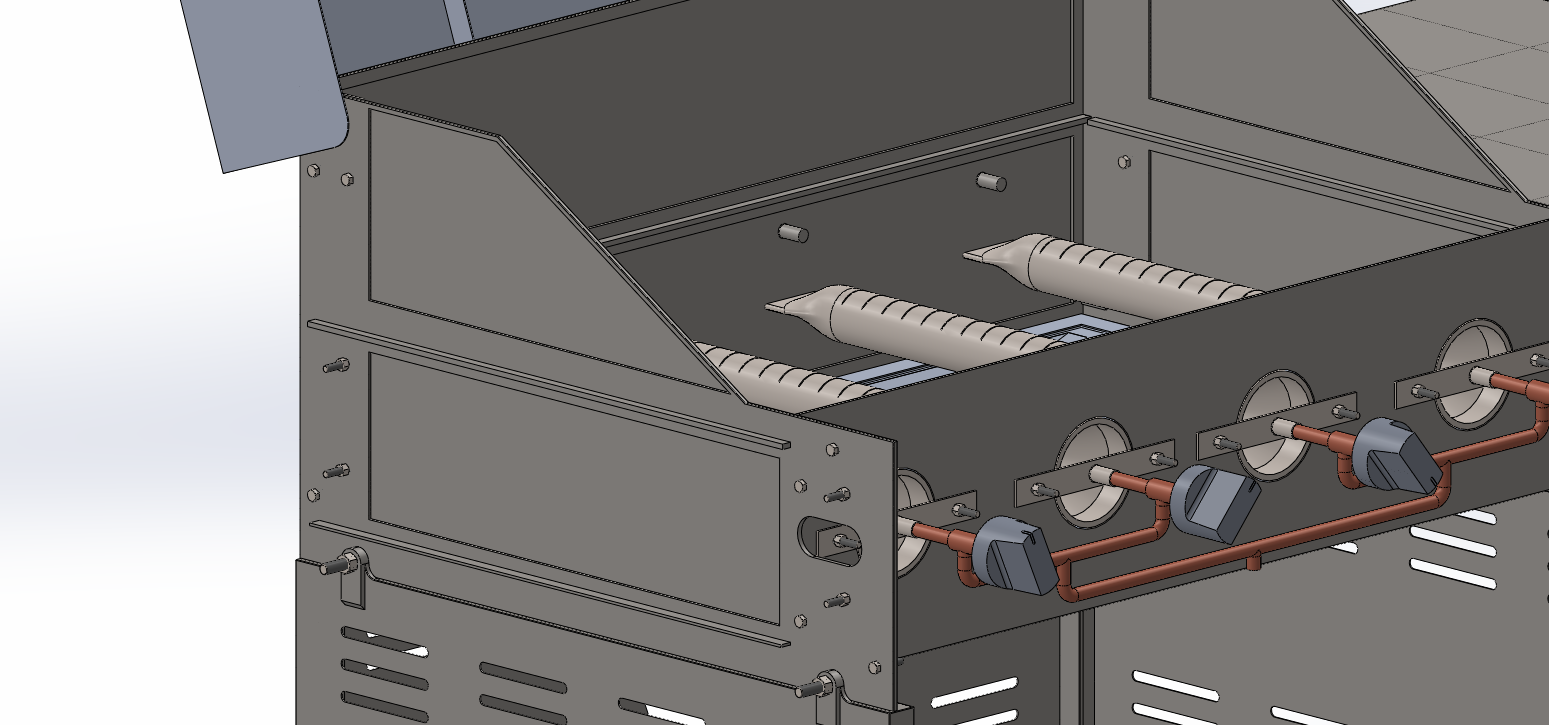
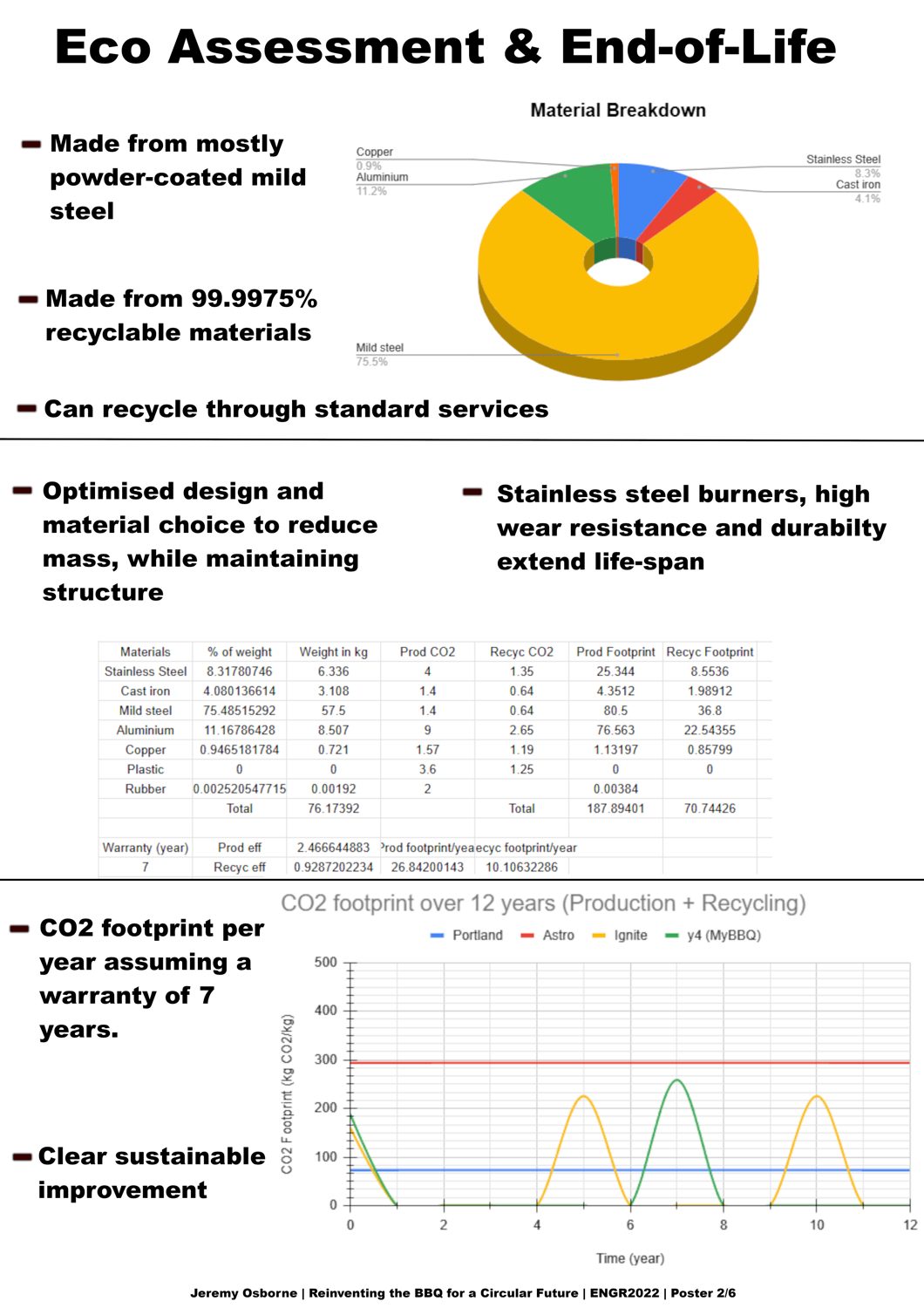
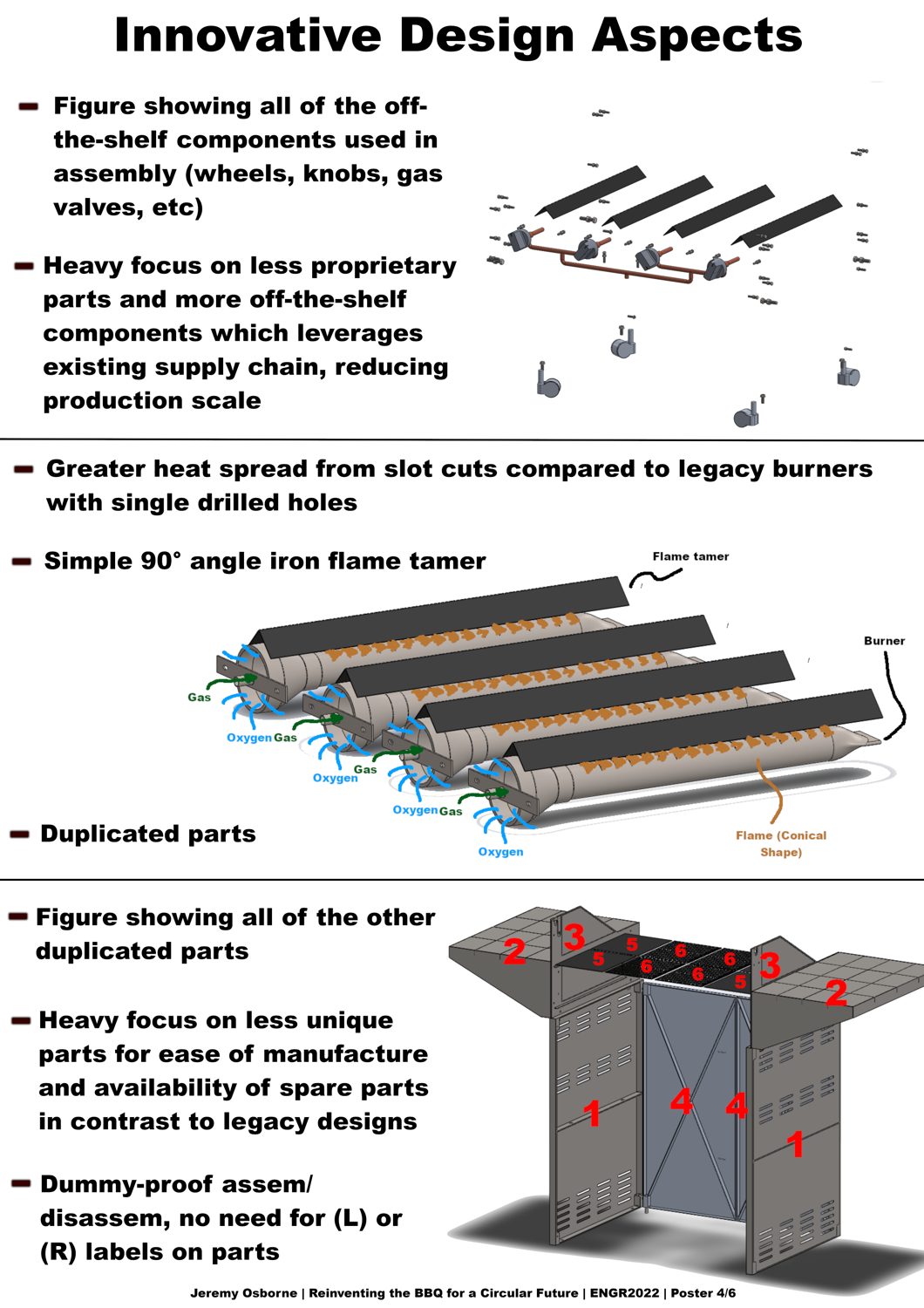
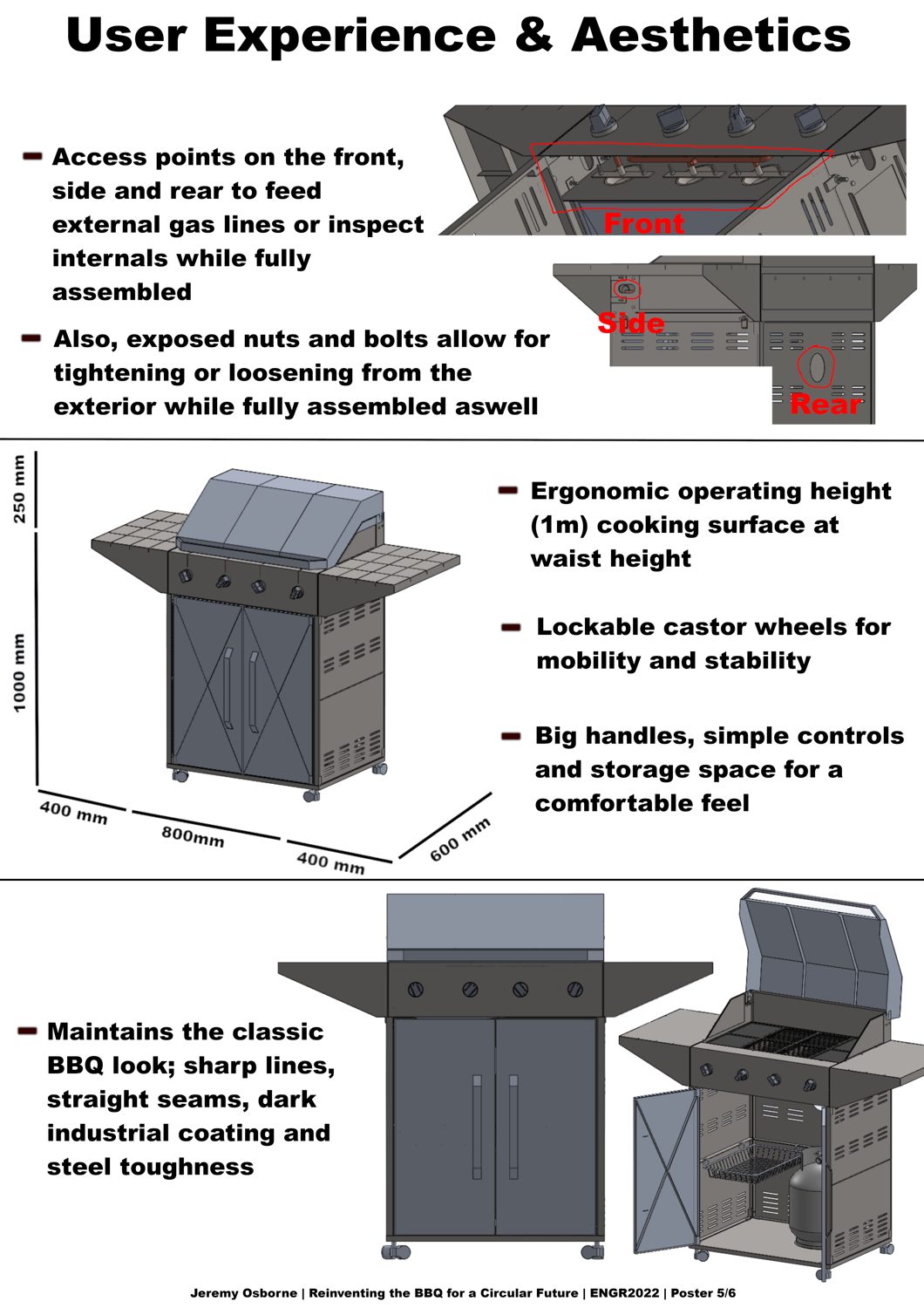
Everything else follows the same idea. The bolts are standard M5 and M8 and reachable with the BBQ assembled. Duplicated parts mean nothing needs a left or right, and the castors, knobs and valves are off the shelf. There's no plastic, so it's over 99.99% recyclable by mass. I also plotted its carbon over 12 years against three retail BBQs and costed it at about $333 a unit in materials.
The posters
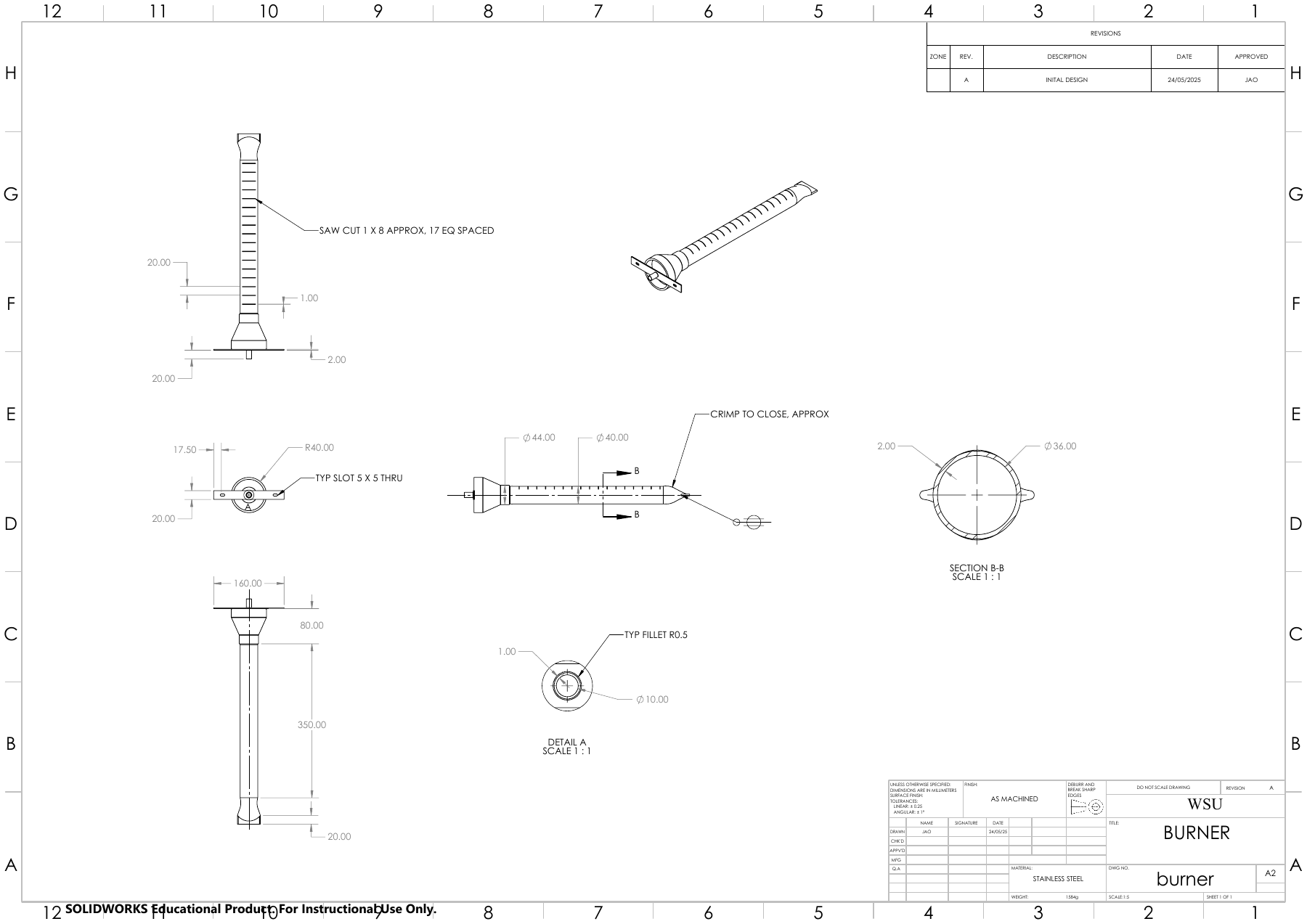
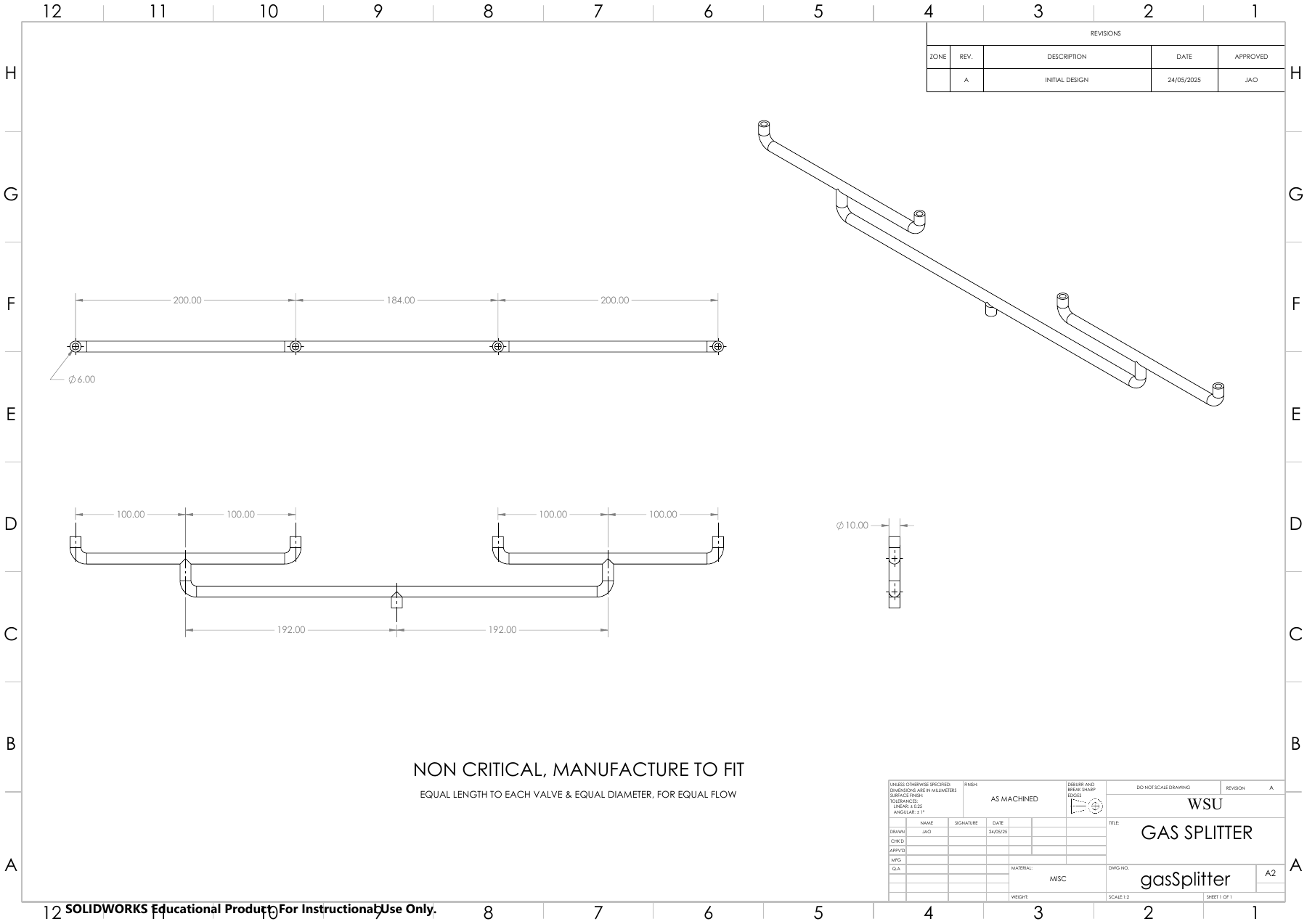
The assessment itself was six A2 posters.
What I took from it
Designing for the end of a product's life shapes it from the start. Every choice here, from the eight-piece cooking surface to the bolts, came from asking how it would be repaired or taken apart. It also meant drawing up all 27 parts to AS 1100 on my own, each with its process, material and finish.
- Message
- Send me a message
- in/jeremy-alec-osborne
- Based in
- Sydney, NSW